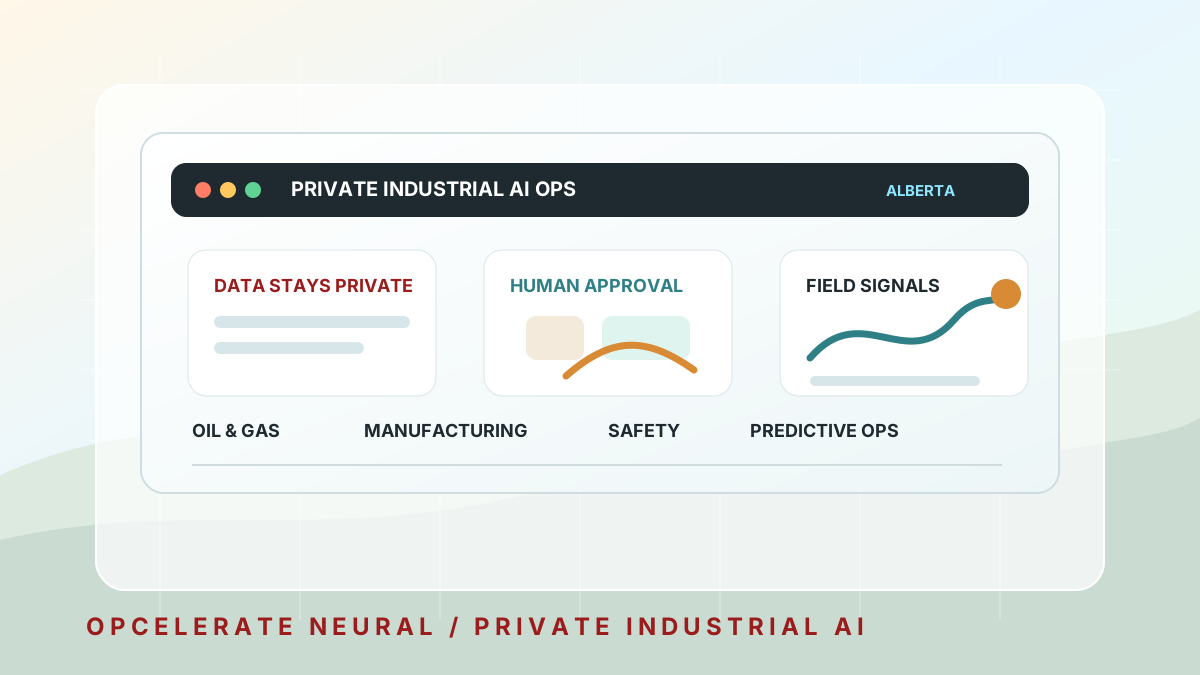
Industrial AI is not a chatbot pasted on top of operations. In Alberta, the useful version respects site safety, cyber controls, approval paths, maintenance records, local teams, and the reality that bad automation can create real cost.
Start with the workflow, not the model
Before choosing cloud AI, on-prem AI, or a hybrid private deployment, name the exact workflow: inspection triage, field notes, tender review, maintenance logs, safety documents, sensor summaries, inventory lookup, permit packets, or computer-vision quality checks.
What private AI should protect
Private industrial AI should protect high-value information, customer records, supplier terms, site procedures, credentials, operational diagrams, and safety-sensitive documents. The right architecture depends on data sensitivity, uptime needs, integration complexity, and who must approve the final output.
Build vs buy
Buy when the workflow is standard and vendor risk is acceptable. Build when the workflow is tied to local operations, private data, custom systems, field staff, or a compliance trail that generic software cannot handle cleanly.
- Define the operating workflow and success metric.
- Classify the data and decide what cannot leave your control.
- Choose cloud, on-prem, or hybrid deployment.
- Require audit logs, permissions, backups, and offboarding.
- Map the human review step before launch.
- Run one pilot before buying a large system.
Where to begin
Start with one practical workflow and one constrained data set. The goal is not to automate everything. The goal is to prove that the system can save time, reduce repeat work, improve decision quality, or make a safety-critical process easier to review.